

A Parent's Guide to the Best Toys for 2 Year Olds
Picking the perfect toys for 2 year olds isn’t just about finding something fun. It's about giving them powerful tools for learning and growing. Often, the best choices are the simplest: think building blocks, pretend play sets, and art supplies that spark their imagination and build real skills.
Welcome to the Wonderful World of Toddler Play
Choosing a toy for a 2-year-old can feel both exciting and a little overwhelming, right? At this incredible age, they're absolute sponges of curiosity, and play is their job—it’s how they figure out the world. Every little action, from stacking a wobbly tower to chattering away to a doll, is a crucial step in their development. This guide is here to help you find that perfect toy to support them on this amazing journey.
Consider this your friendly roadmap through the colourful, noisy aisles of toddler toys. We’ll show you exactly how to find gifts that are safe, engaging, and perfectly matched to the little explorer in your life. Our aim is to make gift-giving feel thoughtful and rewarding, not stressful.
More Than Just Fun and Games
It’s easy to dismiss toys as simple entertainment, but for a toddler, they’re the tools of their trade. The right playthings have a huge impact on their cognitive, physical, and emotional growth. This isn’t just a gut feeling; it’s a core principle that guides parents and educators everywhere.
And the market reflects this. Toddlers are the driving force behind Australia's Toys for Toddlers & Kids market, which is on track to hit a massive US$229.45 million in revenue by 2025. This shows just how much Aussie parents value these essential developmental tools. You can dive deeper into these Australian toy market trends on Statista.com.
"Play is the highest form of research." - Albert Einstein
This simple quote perfectly captures the spirit of toddlerhood. A toy isn’t just a distraction; it's a launchpad for discovery. Through play, kids test out cause and effect, try out new words, and start to figure out how to get along with others.
What This Guide Will Cover
We’ve designed this guide to take the mystery out of choosing the best toys for 2 year olds. We'll break down everything you need to know, from their developmental leaps to practical safety checks, so you can feel confident you're picking a gift that will be both loved and beneficial.
Here's a sneak peek at what’s inside:
- Key Developmental Leaps: A look at what’s happening inside their busy brains and bodies.
- Safety and Durability: Your non-negotiable checklist for shopping with peace of mind.
- Top Toy Categories: How to match toys to the specific skills you want to nurture.
- Budget and Occasion-Based Ideas: Finding the right gift for any event without breaking the bank.
By the time you're done, you’ll see that finding a great toy isn't about fancy features or a high price tag. It’s about matching the right tool to the right moment in their incredible developmental adventure.
Understanding Your 2-Year-Old's Developmental Leaps
Welcome to the whirlwind world of being two! This age is an absolute explosion of growth, where every single day seems to bring a new skill, a fresh word, or a completely different way of looking at things. Getting a feel for what’s happening inside their busy minds and bodies is the secret to choosing toys that are not just fun but genuinely helpful on their journey.
Think of it this way: your toddler is the lead builder on a construction site, and the project is the person they’re becoming. The right toys? They're the most important tools in their toolbox.

Let’s break down the four key areas where your two-year-old is making massive strides. Once you see how these skills connect to playtime, you'll be able to pick out toys for 2 year olds with real confidence and purpose.
Gross Motor Skills: Get-Up-and-Go Power
Gross motor skills are all about the big muscles—the ones in their arms, legs, and torso. This is your toddler's "get-up-and-go" department, powering all their big movements. At two, they’re quickly graduating from wobbly first steps to more confident running, jumping, and climbing.
They’re learning to navigate their world with a new sense of physical freedom. You'll probably notice them trying to kick a ball, tackling stairs while holding on, and maybe even standing on their tiptoes to grab something fascinating from a shelf. All these actions are building up their strength, balance, and body awareness.
Toys that get them moving are brilliant for burning off that classic toddler energy while developing their coordination.
- Ride-on toys: A fantastic way to practise steering and pushing along with their feet.
- Soft play balls: Perfect for throwing, rolling, and those first adorable attempts at catching.
- Small climbing frames or slides: These offer safe and exciting challenges for building strength.
It's also worth looking beyond specific toys to a wider range of safe and engaging activities for 2-year-olds, like introductory sports programs, which can really boost their physical and mental growth.
Fine Motor Skills: The Creator's Toolkit
While gross motor skills are about big actions, fine motor skills are all about the small, precise movements in their hands and fingers. Think of these as your child's "creator" tools, letting them interact with their world in a much more detailed way. This is where hand-eye coordination really starts to shine.
Things like stacking blocks, carefully turning the pages of a board book, or scribbling with a chunky crayon are all building these crucial skills. They're figuring out how to make their hands do exactly what their brain is telling them to do.
Playing with things they can manipulate is like a gym workout for a toddler's hands. It builds the dexterity they'll need for future tasks like writing their name or tying their shoelaces.
Cognitive and Language Skills: The Big Ideas Department
Cognitively, a two-year-old's brain is absolutely on fire. They’re moving beyond simple cause-and-effect (if I drop this, it falls) to more complex problem-solving. You’ll see this in action when they try to fit shapes into a sorter or manage to complete a simple three-piece puzzle.
This stage is also famous for the "language explosion." It's incredible to watch their vocabulary grow from around 50 words to 200-300 words or even more between their second and third birthdays. They start stringing two or three words together to form little sentences like "more juice" or "go outside."
Toys that support this are worth their weight in gold. A play kitchen lets them name different foods, while a toy farm is perfect for making animal sounds and practising new words like "in," "out," and "down."
Social and Emotional Skills: The Heart Skills
Finally, this age marks the very beginning of understanding social rules and navigating big, often overwhelming, emotions. These are their "heart" skills. While true sharing is still a work in progress, they're starting to learn about taking turns and showing empathy—maybe by patting a friend who is sad.
Pretend play is an absolute powerhouse here. When they feed a baby doll or pretend to be a doctor, they're acting out social roles and making sense of the world around them. This kind of imaginative play helps them understand feelings and build the foundations for future friendships. Choosing toys that spark these scenarios is a wonderful way to nurture their growing emotional intelligence.
Your Go-To Checklist for Safe and Sturdy Toys
Before we jump into all the fun and games, let's talk about the most important thing when picking toys for 2 year olds: safety and durability. A truly great toy is one you can hand over with absolute peace of mind, knowing it can handle the… enthusiastic play style of a toddler.
Think of this as your practical, no-fuss guide. Two-year-olds are natural explorers—they use their hands, their mouths, everything!—so our first job is to make sure what they're playing with is completely hazard-free. This checklist will help you feel confident in every choice you make.
What Toy Safety Labels Really Mean
When you pick up a toy, the first thing you'll probably see is the age recommendation. These aren't just suggestions; they're serious safety warnings based on a child's developmental stage. A toy labelled "3+" is a red flag for a 2-year-old, as it almost always means there are small parts that pose a choking risk.
Always look for a label confirming the toy meets Australian safety standards. This is your assurance that it’s been tested for nasty stuff like lead paint or toxic chemicals.
- Look for Non-Toxic Materials: Keep an eye out for toys made from solid wood (with non-toxic finishes, of course), BPA-free plastics, and food-grade silicone.
- Do the Choking Hazard Test: Here’s a classic rule of thumb: if any part of the toy can fit through a toilet paper roll, it's too small for a child under three. Simple and effective.
- Check for Secure Bits and Pieces: Give those button eyes on stuffed animals or wheels on toy cars a gentle tug. They should be firmly attached and impossible for little fingers to pull off.
A toy's real worth isn't just about how fun it is. It's about how safely it lets a child explore, learn, and grow. Safety and durability are the bedrock of great play.
Passing the "Toddler Test"
A toy destined for a 2-year-old has to survive the unofficial "toddler test." Can it handle being dropped from a high chair? Thrown with gusto across the living room? Loved with an intensity that borders on destructive? Flimsy toys don't just lead to tears—they can break into sharp, dangerous pieces.
When you're in the shop, actually hold the toy. Does it feel solid? Are the seams on a plush toy stitched tight? If it’s a wooden toy, run your hand over the edges to check for splinters. Sturdy construction is a tell-tale sign of quality that will last well beyond the terrible twos.
To help you feel confident while shopping, here’s a quick-reference table you can keep in mind. It breaks down the key things to look for and, more importantly, why they matter so much.
Toddler Toy Safety Checklist
| Safety Check | What to Look For | Why It Matters |
|---|---|---|
| Age Appropriateness | The age label is clearly marked and suitable for under 3s. Avoid anything labelled "3+". | Protects against choking hazards and ensures the toy matches their developmental abilities. |
| Choking Hazards | No small, loose, or detachable parts. Use the toilet paper roll test for any questionable pieces. | This is the #1 cause of toy-related injuries for this age group. Vigilance is key. |
| Material Quality | Non-toxic paints and finishes. BPA-free, phthalate-free plastics. Solid, splinter-free wood. | Toddlers put everything in their mouths, so you want to ensure they aren't ingesting harmful chemicals. |
| Structural Integrity | Strong seams, securely attached wheels and eyes, no sharp edges or points. | A poorly made toy can break easily, creating sharp edges or small parts that are dangerous. |
| Cords and Strings | Any strings or cords on the toy are short (less than 22 cm) to avoid entanglement. | Long cords are a strangulation risk. This is a critical check for pull-along toys or activity centres. |
This checklist isn't about taking the fun out of choosing toys; it’s about making sure the fun is safe and can last for years to come.
The Shift to Safer, Greener Materials
More and more, parents are looking for toys that are not only safe for their kids but also kinder to the planet. This has led to a wonderful boom in toys made from sustainable and natural materials.
Things like certified wood from responsibly managed forests, organic cotton, and natural rubber are all fantastic choices. These materials are renewable, biodegradable, and don't contain the synthetic chemicals you might find in some plastics. It’s a big reason why cotton-based toys are becoming so popular with Aussie parents—they're safe, hypoallergenic, and eco-friendly. These educational soft toys are perfect for helping 2-year-olds build motor skills and imagination. If you're curious, you can read more about the trends in the Australian baby toy market on expertmarketresearch.com.
By putting safety and durability first, you’re not just buying a toy. You’re investing in countless hours of safe, creative, and joyful play.
Top Toy Categories That Fuel Development
Alright, so we’ve covered the amazing developmental leaps happening inside your two-year-old’s brain. Now for the fun part: let's connect those milestones to the actual toys that make learning feel like pure play. Thinking about toys in categories helps you go from wandering the aisles aimlessly to shopping with a real purpose.
Think of each toy category as a specialist trainer, zeroing in on a different set of skills. By giving your little one a mix of options, you’re essentially creating a well-rounded "play diet" that nourishes every single part of their development. Let's jump into the key groups that turn the playroom into a powerhouse of growth.
Toys for Movement and Coordination
Two-year-olds are little bundles of physical energy. Toys that get them moving are non-negotiable for building those big-muscle gross motor skills, boosting their strength, and fine-tuning their balance. These are your classic "get the wiggles out" toys.
But they do more than just burn off that toddler energy. They’re teaching body awareness. Every time they steer a ride-on car around the coffee table or take a joyful (if wobbly) kick at a ball, they’re figuring out how their body moves through space.
Some brilliant choices in this category include:
- Ride-on Toys: Those low-to-the-ground cars or animal scooters they can push with their feet are fantastic for building leg strength and mastering the art of steering.
- Balls: Keep it simple with lightweight, soft balls. They’re perfect for rolling back and forth, tossing, and those first adorable attempts at kicking.
- Push-and-Pull Toys: A classic wooden duck on a string or a little toy lawnmower gives them a brilliant excuse to practise walking with a bit more confidence and stability.
Toys for Building and Creating
This category is where fine motor skills and brainy cognitive growth really shine. Toys that get them stacking, sorting, and fitting pieces together are like a gym session for their little hands and a fantastic puzzle for their rapidly developing minds. This is the bedrock of problem-solving.
You can practically see the gears turning as they figure out how to stack a tower just one block higher or which shape clicks perfectly into the right hole. This is where they learn patience, focus, and hand-eye coordination in a big way. Exploring different shape toys for toddlers, like sorters and puzzles, is an amazing way to support this growth.
Look for these creative powerhouses:
- Building Blocks: Whether you go for classic wooden blocks or the big plastic interlocking kind, they are the ultimate open-ended toy for sparking creativity.
- Simple Puzzles: Start with chunky wooden puzzles that have just three to five pieces. The ones with little knobs are a great first step for tiny hands to grip.
- Stacking Rings and Cups: These beauties teach size, order, and the simple, hilarious joy of building something up just to knock it all down again.
Toys for Pretend and Imaginative Play
Welcome to the magical world of make-believe! This is a crucial space for your two-year-old's social and emotional development. Pretend play lets them act out scenarios they see every day, helping them make sense of the world and the roles different people play in it. It's their safe space to practise empathy and communication.
When your toddler carefully feeds their teddy bear or babbles away on a toy phone, they're experimenting with language and learning what it means to care for someone else. It's also a massive boost for their imagination, laying the foundation for storytelling down the track.
Pretend play is so much more than just a game; it's a child's first draft of understanding the world. It’s how they process what they see, rehearse social skills, and explore big feelings in a small, safe way.
To get their imagination firing, try these:
- Play Kitchens and Food: A mini kitchen with some colourful play food is a timeless winner for little ones who want to be just like mum and dad.
- Dolls and Stuffed Animals: These often become a toddler's first best friends, perfect for nurturing and practising those early social skills.
- Dress-Up Clothes: You don't need elaborate costumes. Simple things like hats, scarves, or a toy doctor's coat can instantly transport them into a whole new world.
The image below gives you a quick rundown of the key safety checks to make, ensuring all this amazing imaginative play stays worry-free.
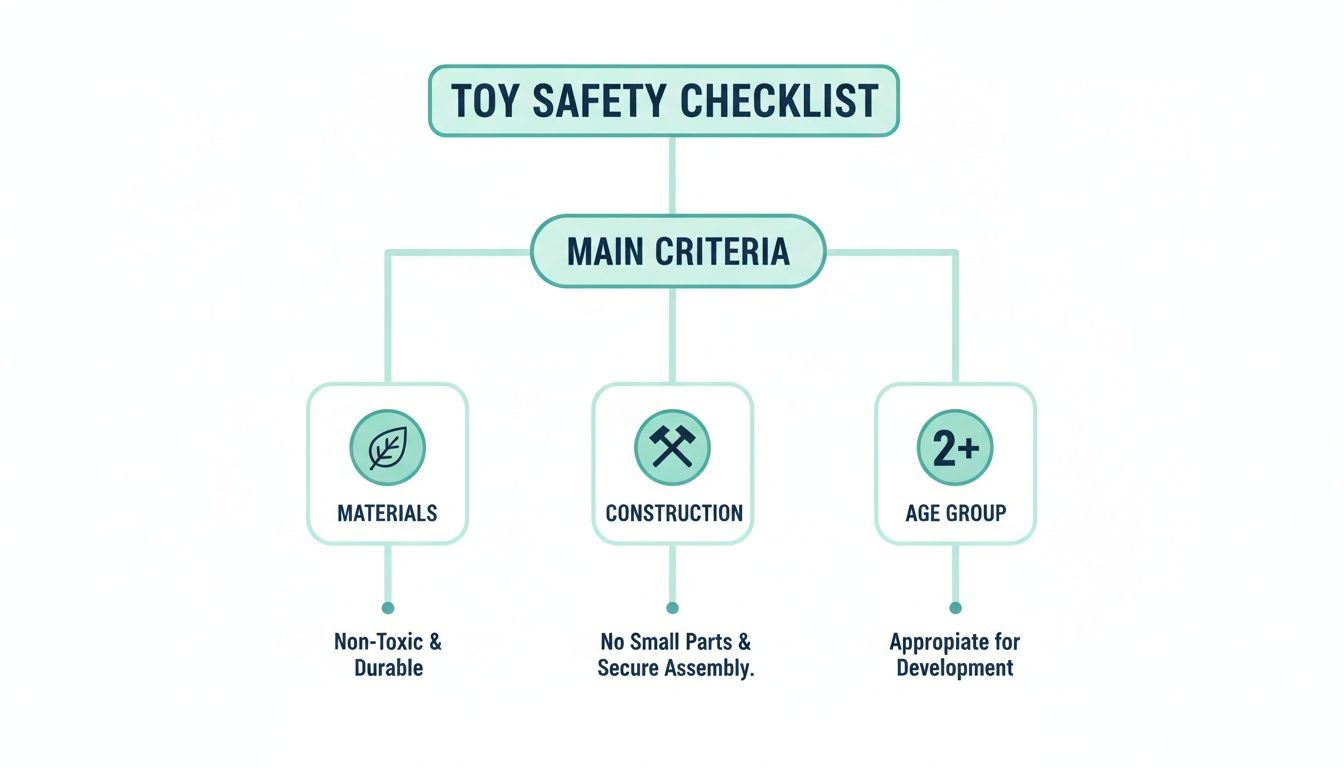
This little guide is a great reminder that focusing on safe materials, solid construction, and age-appropriate design is the key to happy and secure playtime.
Toys for Quiet Time and Focus
Not all play needs to be loud and boisterous. Quiet-time toys are just as important for helping a two-year-old develop concentration and a genuine love for learning. These are the toys that invite them to sit, observe, and engage their minds calmly.
This is a really important category for language skills. Snuggling up to share a book is one of the best things you can do to build their vocabulary and stretch their attention span.
- Chunky Board Books: Those tough, durable pages are made for little hands to turn. Look for bright, simple pictures and short stories to hold their interest.
- Art Supplies: Think chunky crayons, washable finger paints, and big sheets of paper. These are perfect for creative expression without needing a whole lot of fine motor control just yet.
- Simple Musical Instruments: A small xylophone or a set of maracas are wonderful for introducing cause-and-effect and the pure fun of making different sounds.
Finding the Perfect Gift for Any Budget or Occasion
You don't always need a big event on the calendar to spoil a two-year-old. Whether you're planning a huge second birthday bash, a holiday surprise, or just feel like giving a little 'just because' treat, the trick is matching the toy to the moment.
And here’s the great news: a gift that sparks real joy doesn't have to break the bank. A toddler’s excitement has absolutely nothing to do with the price tag; it’s all about the fun packed inside and the love behind it.
Tailoring Gifts to the Occasion
Different celebrations naturally call for different kinds of gifts. A milestone second birthday might feel like the right time to invest in something big and durable that will see them through the next few years. On the other hand, a simple visit to a friend’s house might just call for a small, thoughtful gesture.
Thinking about the context is a great way to cut through the noise of endless toy options. It helps you zero in on a choice that feels right for that specific event.
- Big Birthdays and Holidays: These are often the moments for a "wow" gift. Think about something that can become the centrepiece of their play space—a sturdy wooden climbing frame, a detailed play kitchen, or their very first balance bike. These are investment pieces that support their development for the long haul.
- Small Celebrations or 'Just Because': There's something magical about a spontaneous gift. A new set of chunky, easy-to-grip crayons, a captivating picture book, or a fresh tub of play-doh can turn a totally normal afternoon into something special.
A thoughtful gift is less about its size or price and more about its ability to create a moment of connection and delight. The simplest toy can create the biggest smiles when it's given with love.
Smart Shopping for Every Budget
You can absolutely find fantastic, high-quality toys for 2 year olds at any price point. The secret is to focus on play value—how many different ways can they actually use this toy? Open-ended toys almost always give you the best bang for your buck.
A simple set of wooden blocks, for instance, can be used for years to build towers, castles, roads, and whatever else their growing imagination dreams up. That kind of versatility offers so much more long-term value than a flashy electronic toy that only does one thing.
Here’s a quick breakdown of how to find great value, no matter your budget:
- Budget-Friendly Finds (Under $30): Look for items that get those little hands and creative minds working. Think art supplies, simple puzzles, sturdy board books, or a fun set of play food. These are small treasures with a huge developmental impact.
- Mid-Range Marvels ($30-$75): In this sweet spot, you can find high-quality building block sets, durable dolls, or simple ride-on toys. These are often the staple toys that get pulled out for play every single day.
- Investment Pieces ($75+): For those bigger occasions, consider toys that will grow with your child. A convertible art easel, a small indoor slide, or a quality set of magnetic tiles can provide years of engaging play.
Making Any Gift Feel Special
Don't underestimate the power of presentation! A little bit of effort here can turn a simple present into a truly memorable experience. For a two-year-old, the fun often starts the second they see the wrapping.
Instead of standard gift wrap, why not try colourful butcher paper that they can scribble on later? Adding a big, reusable bow or even tying a small toy like a wooden car to the outside of the package adds an extra layer of fun. It’s those personal touches that show you really put some thought into it.
For more inspiration on making presents stand out, take a look at our guide on gift ideas for kids. With this practical advice, you can feel confident you're choosing a gift that will bring a huge smile, no matter the reason for celebrating.
Your Top Questions About Toddler Toys, Answered
Stepping into the world of toys for 2-year-olds can feel a bit overwhelming, and it always brings up a few common questions. From wondering if you're buying too many toys to figuring out which ones will actually get played with, let's clear up some of the biggest queries so you can feel great about your choices.
How many toys is too many?
This is probably the number one question on every parent's mind. It’s so easy to think more toys mean more fun, but a bit of research—and plenty of real-world experience—shows that the opposite is usually true. When a child has fewer toys to choose from, they tend to play more deeply and creatively with what they have, really stretching their imagination.
A minimalist approach isn't about depriving your toddler; it's about giving them richer, more focused play experiences. Think quality over quantity—it’s the secret to less clutter and more meaningful fun.
A brilliant way to manage the toy pile is with toy rotation. It's a simple idea: pack away some toys and swap them out every few weeks. This keeps their play area feeling fresh and exciting, and honestly, they'll greet those "old" toys like they're brand new.
What's the deal with electronic toys?
In a world full of screens and gadgets, it's only natural to wonder where electronic toys fit in. Some can be educational, for sure, but it’s worth weighing them against classic, open-ended toys. Most toys that light up and make noise have a specific way they're "supposed" to be played with, which can end up shutting down a child's own creative instincts.
On the other hand, timeless toys like building blocks or a tub of playdough put your child in the driver's seat. They get to be the inventor, the storyteller, and the problem-solver, which is a massive boost for their growing brain.
How can I encourage my toddler to play independently?
We all love those moments when our little one is happily absorbed in their own world. So, what kinds of toys are best for encouraging that confident, independent play? The trick is to find activities that are captivating without being too frustrating.
- Simple Puzzles: Those chunky wooden puzzles with just a few big pieces are perfect. They offer a satisfying little challenge that helps build focus.
- Art Supplies: A big sheet of paper and some toddler-safe crayons can keep them busy for ages as they discover colours and create their first masterpieces.
- Small World Play: A little farm set or a simple dollhouse lets them create their own stories and act out different scenarios, all on their own terms.
And one final tip: always try to choose toys that can grow with your child. A fantastic set of magnetic tiles or a versatile play kitchen will be just as engaging at three or four as it is at two. That's what gives you brilliant long-term value and countless hours of play.
Ready to find that perfect, thoughtful gift without all the guesswork? Bowtique's curated collections and clever gift-finder make it simple to discover high-quality toys that delight and inspire. Explore our selection and become the best gift-giver you know