

A Guide to the Best Toys for Newborns
The absolute best toys for a newborn are often the simplest ones. Think soft rattles, black-and-white flashcards, and textured play mats. These kinds of toys are perfectly in sync with a newborn's brand-new vision and developing motor skills, offering just the right amount of gentle stimulation without overwhelming their sensitive little systems.
Welcome to the World of Newborn Play
Stepping into the baby aisle can feel like a lot, but choosing toys for a newborn is simpler and more magical than you might think. For your new baby, 'play' isn't about fancy gadgets or following rules; it's all about exploring the world through their senses and, most importantly, connecting with you. These first few months are a whirlwind of growth, and the right toys are simply gentle guides for their incredible journey.
I like to think of a baby's brain as a new computer booting up for the very first time. It needs simple, clear information to start making sense of everything. This guide is here to be your friendly companion, cutting through all the noise to show you how basic toys can support this amazing process. We'll explore why high-contrast patterns, soft textures, and gentle sounds are the perfect first tools for their developmental toolkit.
Understanding Play in the First Three Months
From birth to three months, play is purely about discovery. Every crinkle they hear, every soft fabric they touch, and every bold pattern they see helps build crucial pathways in their brain. It’s not about actively teaching them a skill; it's about creating an environment where their brain can naturally forge its own connections.
So, what does play actually look like in these early days?
- Visual Tracking: It’s in the way their eyes follow a slowly moving object, like a high-contrast mobile above their cot or a soft toy you wiggle in front of them. This simple game is busy strengthening their eye muscles and focus.
- Auditory Discovery: When they hear a gentle rattle or a soft lullaby, they’re learning to pinpoint where sounds are coming from. It's their first lesson in cause and effect—"When my hand moves, this thing makes a noise!"
- Tactile Exploration: Feeling the difference between a smooth silicone teether and a plush teddy bear gives them vital information about the world around them.
Remember, the most valuable 'toy' for a newborn is always you. Your voice, your touch, and the sight of your face provide the richest sensory experiences a baby could ask for. Toys are just lovely little extras to enhance the beautiful connection you're already building.
Choosing Toys with Confidence
My goal here is to help you feel confident and excited, whether you're picking out a toy for your own little one or searching for that perfect gift. Once you understand what a newborn can actually see, hear, and feel, choosing the best toys for newborns becomes so much clearer. It helps you look past the flashy features and focus on what really matters: meaningful sensory input.
This mindset also makes gift-giving more thoughtful and intentional. If you’re looking for some great ideas that go beyond the usual registry items, our guide to unique baby shower gifts has plenty of inspiration. At the end of the day, every interaction is a form of play, and with a few well-chosen items, you can help make those precious moments truly count.
How Your Newborn's Senses Are Developing
To find the perfect toys for a newborn, it helps to see the world from their perspective. Imagine everything being brand new—every sight, every sound, every touch. Their senses are just starting to fire up, and understanding this incredible journey is the key to choosing toys that will genuinely connect with them, not just clutter the nursery.
For the first three months, your baby is on a full-time sensory adventure, working around the clock to make sense of their new world. It's a bit like tuning an old radio; at first, everything is a bit fuzzy, but day by day, things start coming into focus with more clarity.
Seeing a Whole New World
Right after birth, your baby's vision is their least developed sense. Their world is a beautiful blur, and they can only really focus on things about 20 to 30 centimetres away. That’s roughly the distance from your arms to your face when you're holding them close—nature's clever way of making sure you're their favourite thing to look at.
In those first few weeks, they also see life mainly in black, white, and shades of grey. Their ability to see colour hasn't quite kicked in yet, which is why high-contrast patterns are so utterly mesmerising for them.
A simple black-and-white striped toy might look basic to us, but to a newborn, it's a visual firework display. The sharp contrast gives their developing brain the strongest possible signal, making it easier for their eyes to focus, practice tracking, and build crucial neural connections.
This timeline shows just how quickly their play skills evolve as their senses sharpen over these first few months.
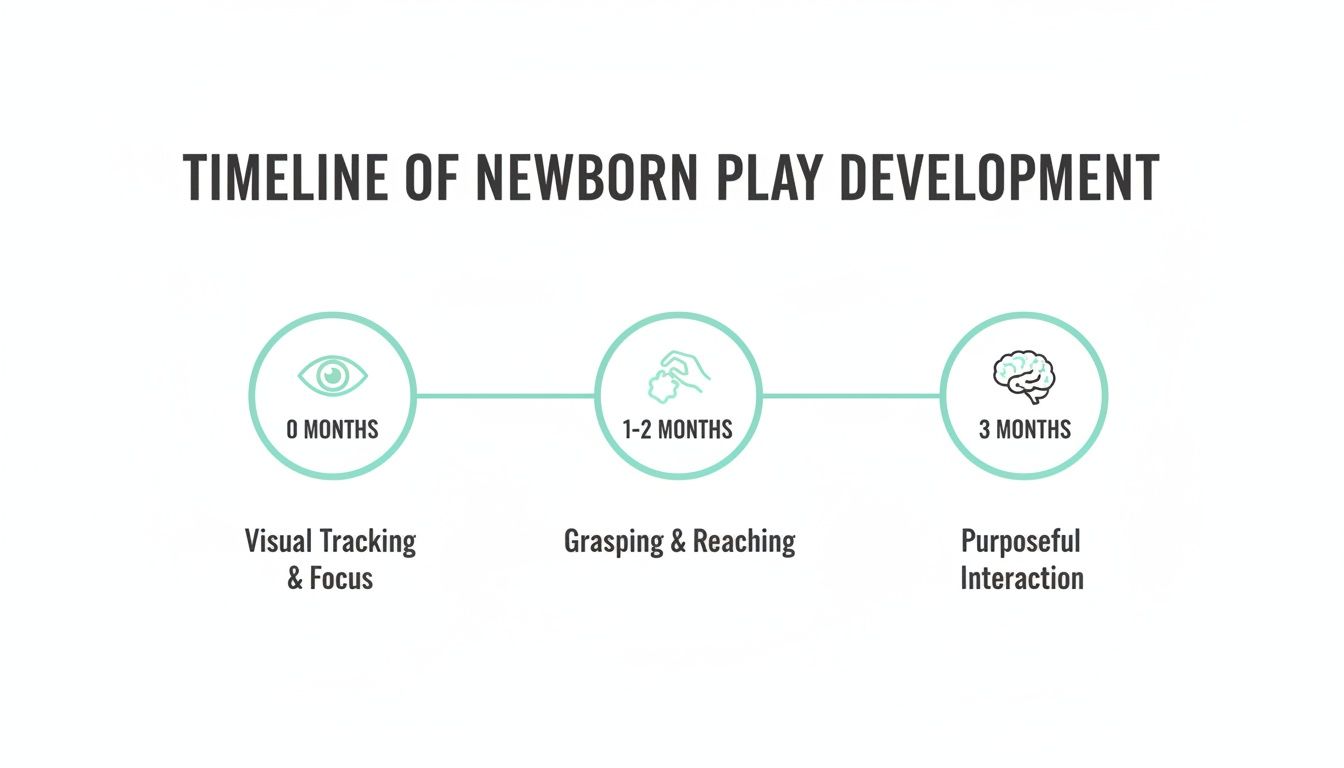
As you can tell, it all builds on itself. Play starts with simple looking and listening, then slowly moves toward more active, hands-on exploration.
Here’s a quick reference guide to help you understand what your baby is experiencing through their senses and how you can support them.
Newborn Sensory Milestones from Birth to 3 Months
| Sense | What They Can Do | How to Support Their Development |
|---|---|---|
| Sight | Focus on objects 20-30 cm away. Sees in black, white, and grey. Starts tracking moving objects with their eyes. | Use high-contrast toys (black, white, red). Hold toys at the right distance. Slowly move toys from side to side. |
| Hearing | Recognises familiar voices and sounds from the womb. Startled by loud noises. Prefers gentle, rhythmic sounds. | Talk, read, and sing to your baby often. Use toys that make soft, gentle sounds like rattles or chimes. Play soothing music. |
| Touch | Responds to touch on their skin. Has a natural grasp reflex. Starts to notice different textures. | Offer lots of skin-to-skin contact. Swaddle them for security. Introduce toys with varied, safe textures (soft, smooth, bumpy). |
| Smell | Can distinguish their mother's scent from others. Prefers sweet smells. | Avoid strong perfumes or scented lotions. Let them smell different (safe) things, like a piece of fruit. |
| Taste | Prefers sweet tastes over bitter or sour ones. Explores the world with their mouth. | Breast milk or formula provides all the taste experience they need at this stage. Ensure all toys are safe for mouthing. |
This table is just a starting point, of course! Every baby develops at their own unique pace, but it gives you a good idea of what's happening behind the scenes.
Listening to Life's Soundtrack
Unlike their vision, your baby’s hearing is remarkably well-developed from day one. They’ve spent months listening to your voice, your heartbeat, and the muffled soundtrack of the outside world from the comfort of the womb. It’s no wonder the sound of a familiar voice is so incredibly soothing for them.
They are, however, very sensitive to loud or sudden noises, which can easily give them a fright. Their auditory system is tuned to gentle, rhythmic sounds that remind them of the safe, cosy environment they just left.
So, what kinds of sounds are best?
- Soft Rattles: The gentle sound from a soft rattle encourages them to turn their head and figure out where it’s coming from.
- Soothing Music: You can’t go wrong with lullabies or calming classical music, which can have a noticeably relaxing effect.
- Your Voice: Honestly, nothing beats the sound of you. Singing, talking, and cooing to your baby is the most powerful and comforting sound they can hear.
This early auditory stimulation helps them learn to tell sounds apart and start to understand their environment. A simple rattle isn't just making noise; it’s teaching them a foundational lesson in cause and effect.
Feeling Their Way Forward
Touch is one of the very first senses to develop and is a newborn’s main channel for communication and learning. From the secure feeling of a swaddle to the warmth of your skin, touch is how they feel safe, loved, and connected to the big, new world around them.
Introducing different textures gives their brain a wealth of sensory information to work with, helping to build important connections. A smooth plastic ring feels completely different from a soft, plush bunny or a crinkly fabric book. Each new texture is like a new piece of data for their brain to process and learn from.
This tactile exploration goes hand-in-hand with their developing motor skills. Around 2-3 months, their involuntary grasp reflex will start to evolve into a more purposeful grip, and they'll begin reaching for and holding onto things. Toys with varied textures—like a soft koala with bumpy ears and crinkly feet—offer a rich sensory experience that encourages them to explore with their hands and, eventually, their mouth.
Laying the Foundation with Educational Toys
When you hear “educational toys” for a newborn, your mind might jump to flashcards and baby-sized abacuses. But let’s be real – for a baby in their first few months, “education” looks a whole lot simpler, and frankly, a lot more profound. It’s all about building the very first neural pathways that will support literally everything they learn later on. The right toys are the perfect tools for this incredible job.
Think of your newborn’s brain as a brand new garden. Every single sensory experience—every new sight, sound, and touch—is like planting a seed. Educational toys are designed to sow the most important seeds first, helping your little one make fundamental connections about how the world works. They’re the true building blocks of cognition, turning simple, instinctual play into powerful brain development.
These toys aren't just things to look at; they're conversation starters between your baby and their brand new world.
Why High Contrast Is a Newborn's Best Friend
As we’ve mentioned, a newborn’s vision is a work in progress. Their world is soft, blurry, and a little out of focus. Because of this, they see best in black and white, which is precisely why high-contrast toys are so completely mesmerising for them. The sharp, clean lines of a black-and-white pattern send the strongest possible visual signal to their developing brain.
This strong signal makes it easier for their eyes to focus, which helps strengthen their eye muscles and lets them practise tracking movements. When you slowly move a high-contrast flashcard from one side to the other, you’re not just keeping them busy. You're giving their eyes a gentle workout that builds the coordination they’ll need for everything from reading to exploring their world down the track.
Some fantastic high-contrast options include:
- Black and White Flashcards: Simple geometric shapes or animal outlines are perfect for capturing their attention during tummy time.
- Mobiles with Bold Patterns: A mobile hanging over the cot with dangling black-and-white shapes provides ongoing visual stimulation.
- Soft Books with Stark Images: Crinkly books with simple, bold pictures offer a fantastic mix of visual and tactile input.
And for a classic and highly effective tool, don't overlook the power of a good board book. This is a great guide to picking the perfect board book to get you started.
Learning Cause and Effect with Simple Toys
The idea of cause and effect is one of the first huge lessons a baby learns. It’s that lightbulb moment of, "Hey, I can make things happen!" This is a massive cognitive leap, and it often starts with something as simple as a rattle.
When your baby accidentally waves their arm and hears a gentle sound, a connection sparks. They do it again. And again. Soon, they start to understand that their action—the movement—caused the reaction—the sound. This is the very beginning of purposeful interaction and problem-solving.
Every shake of a rattle or kick of a play-mat piano is a tiny science experiment. Your baby is the lead researcher, forming a hypothesis ("If I do this...") and testing the outcome ("...then that happens!"). This cycle of action and feedback is the engine that drives early learning.
This is why educational toys are such a great choice for newborns. They are specifically designed to foster this kind of discovery. Research shows they can boost hand-eye coordination by 20-30% in the first six months simply by stimulating these crucial neural pathways as babies grasp, shake, and interact.
A lightweight rattle is easy for their tiny hands to hold, and a kick-and-play piano gym gives them immediate auditory feedback for their leg movements. They are wonderfully simple tools for teaching one of life's most important lessons, making them some of the best toys for newborns you can find.
The Comforting Power of Soft and Sensory Toys
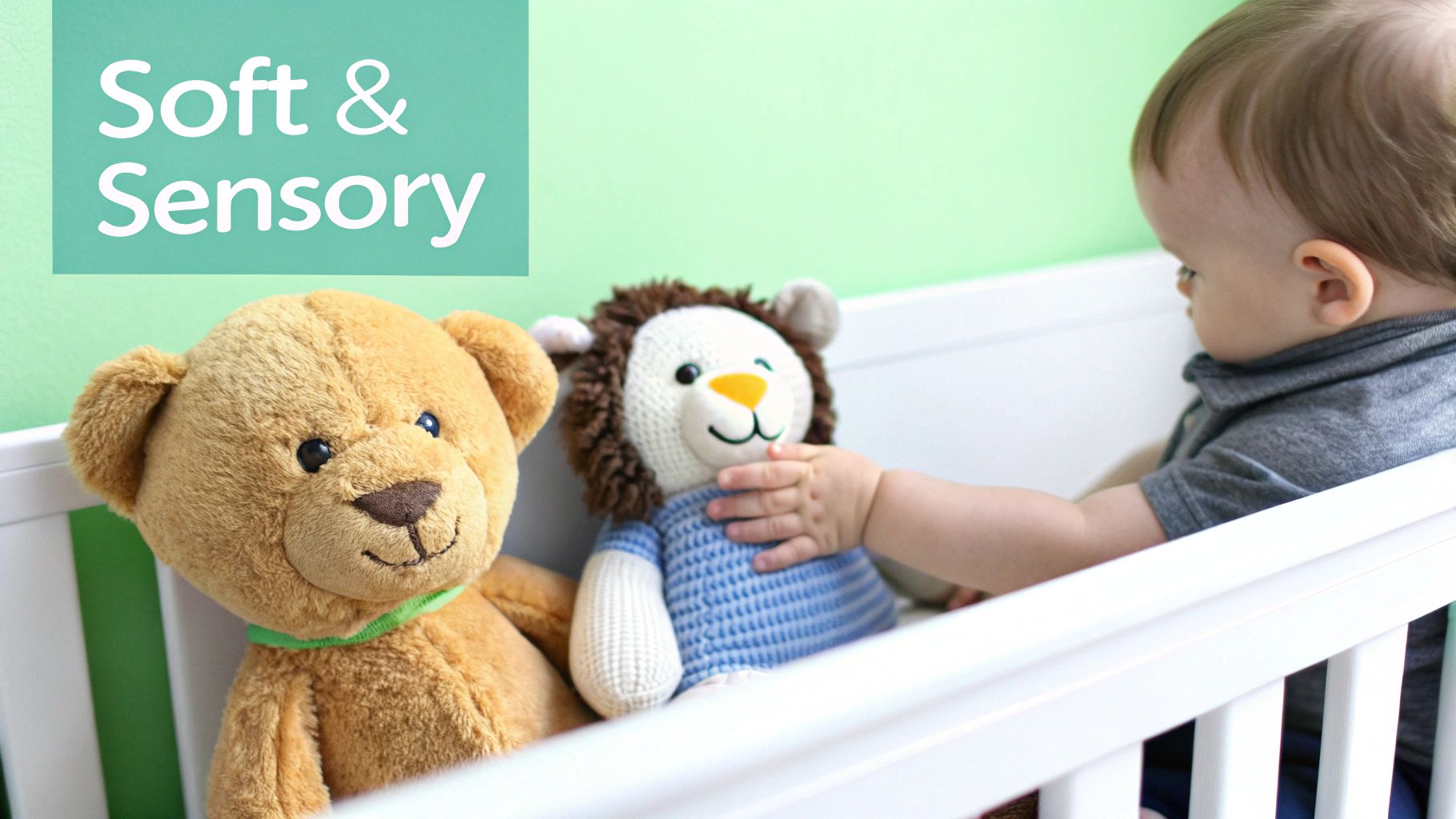
While bold, high-contrast patterns are fantastic for catching a newborn’s attention, soft and sensory toys tap into something much more fundamental: their deep-seated need for comfort and closeness. These aren't just cute, cuddly playthings; they are genuinely powerful tools for helping your little one feel secure and learn about the world through touch. A simple plush toy often becomes a baby’s very first friend, offering a constant, reliable sense of security.
This bond can be so strong that these toys often become what child development experts call transitional objects. You know the one—that well-loved, slightly worn teddy bear or floppy-eared bunny that goes everywhere. It’s so much more than a toy. It becomes a portable source of comfort that helps your newborn self-soothe and feel safe, especially during tricky moments like bedtime or when you’re out of sight.
A Rich World of Textures
Beyond the emotional support, these toys are sensory goldmines. A newborn's brain is practically built to learn through touch, and exposing them to different textures provides a huge amount of information for their developing mind to sort through. A single soft toy can open up a whole new world of tactile experiences.
Think about a soft toy elephant, for instance. It might have:
- A plush, velvety body for gentle cuddles.
- Crinkly, noisy ears that make a satisfying sound when squeezed.
- A smooth, satin ribbon tag that’s perfect for tiny fingers to explore.
- Bumpy, textured feet that feel interesting against their little hands or gums.
Each of these different surfaces sends unique signals to the brain, helping to forge those all-important neural connections. This simple act of feeling and exploring is a foundational form of sensory play, teaching your baby about their environment in the gentlest way possible.
In Australia, soft toys are a top choice for newborn safety and comfort. Not only do they support motor skills, but they also encourage attachment to a security object. In fact, some reports show a 28% faster soothing response in newborns who have daily contact with soft textures. You can read more about these insights into the Australian toy market.
Choosing the Best Soft Toys
When you’re on the hunt for a soft or sensory toy, safety and variety should be front and centre. A well-chosen toy will give your baby both comfort and gentle stimulation, making it one of the most essential and loved items in their early collection.
Always look for toys specifically designed for newborns. This is your best guarantee that they’re made from non-toxic, baby-safe materials and are built to withstand a whole lot of love (and, let's be honest, chewing).
Here’s a quick checklist for what to look out for:
- Securely Stitched Features: Make sure any eyes, noses, or other details are embroidered on. Little plastic parts can become detached and pose a choking hazard.
- Varied Textures: The best sensory toys will have a mix of materials. Look for a combination of soft plush, smooth satin, bumpy corduroy, or crinkly fabrics to really engage their sense of touch.
- Lightweight and Graspable: A newborn needs something small and light enough for them to eventually hold onto. Toys with loops, knots, or long limbs are often easier for their tiny hands to grip.
- Washable Materials: This one’s just practical. These toys are going to get covered in drool, so always pick something that can be popped in the washing machine to keep it clean and hygienic.
By keeping these points in mind, you can find a soft companion that’s not just a source of endless comfort, but also a brilliant tool for your baby’s sensory development. It's this double-duty role that makes them one of the absolute best toys for newborns.
Choosing Gentle Electronic and Musical Toys
The electronic toy aisle can feel a bit overwhelming, can't it? It’s often a wall of flashing lights and blaring sounds. But when you're choosing something for a newborn, the goal isn't to find the loudest, brightest thing on the shelf—it's to find something that gently engages them.
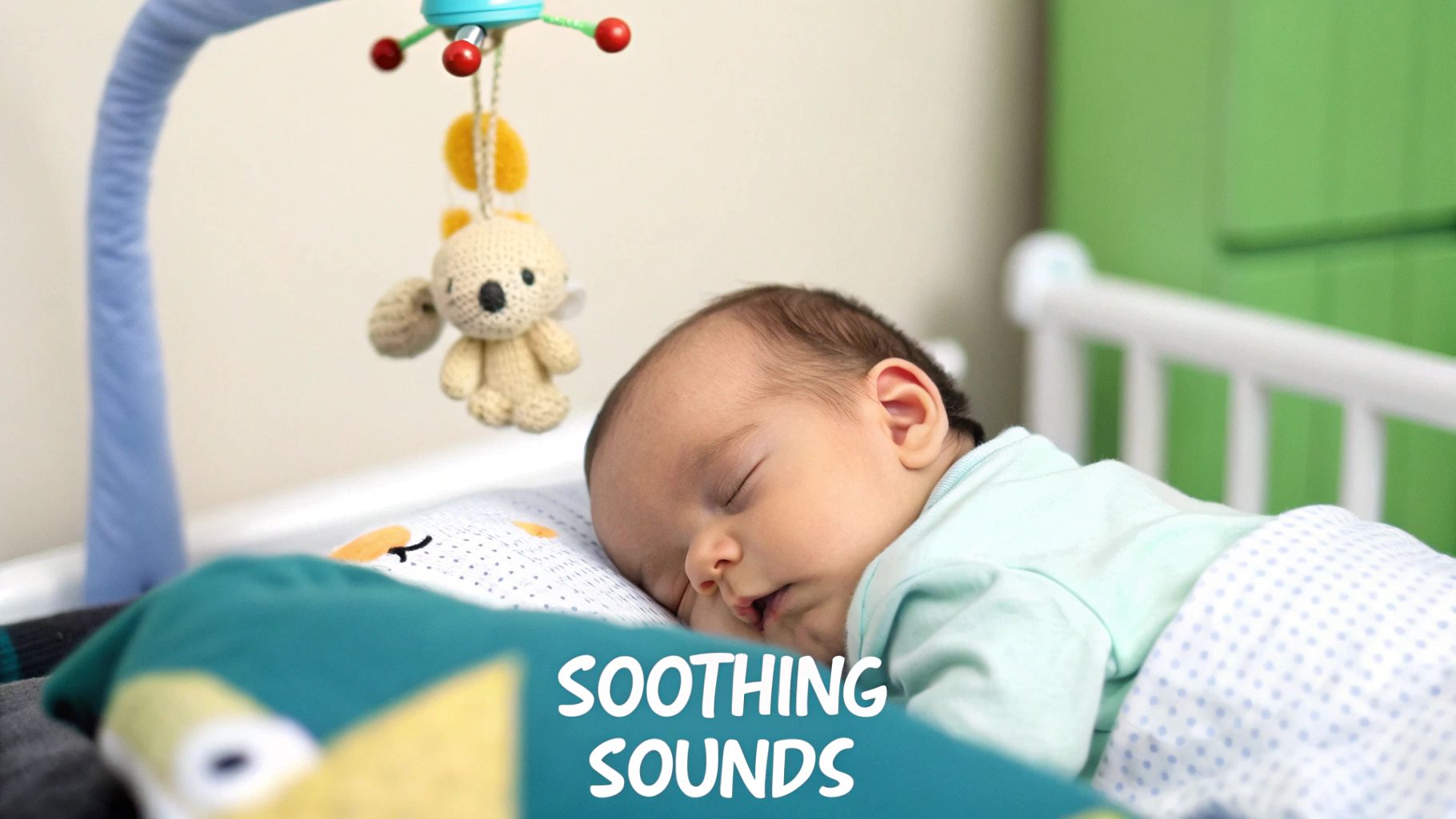
The best electronic and musical toys for a tiny baby are designed to soothe, not startle. They're the ones that whisper instead of shout, offering just enough stimulation to capture their curiosity without overwhelming their brand-new sensory system.
Finding the Right Balance
With electronic toys for this age, less is always more. Think of them as tools for creating a calm, predictable atmosphere, not as constant entertainment. The best ones have features that support this gentle approach.
Look for simple, soothing elements like:
- Soft, glowing lights that fade in and out, rather than ones that flash or strobe.
- Gentle melodies or simple classical tunes instead of loud, busy pop songs.
- White noise or nature sounds, which can be incredibly comforting as they mimic the sounds of the womb.
- Subtle vibrations or heartbeat sounds, which are perfect for calming a fussy baby.
These features have real-world benefits. A musical mobile that projects soft, calming stars onto the ceiling can become a beautiful part of your bedtime routine. In the same way, a plush toy with a gentle heartbeat sound can be a real lifesaver during a tricky nappy change or a long car ride.
A great rule of thumb: if a toy seems too loud or bright for you, it’s definitely too much for your baby.
Smart Toys for Soothing and Development
Modern electronic toys are more popular than ever, and for good reason when they're chosen with care. In Australia, they are a fast-growing category, with parents reporting 25% higher engagement times compared to some traditional toys. Even better, a well-designed electronic baby gym or vibrating chair can reduce fussiness by up to 40% while encouraging that all-important tummy time. You can read more about these Australian baby toy market trends to see just how much of an impact they're having.
This shows that the right electronic toy is much more than a distraction—it's a genuinely helpful tool for soothing and development.
So, what should you keep an eye out for?
- Adjustable Settings: Volume controls and brightness settings are non-negotiable. They let you customise the experience to match your baby's unique mood and sensitivity level.
- Automatic Shut-Off: Features like a timer or auto shut-off are incredibly practical. They save batteries and ensure the nursery stays peaceful once your little one has drifted off to sleep.
- Multi-Sensory, Not Overwhelming: A great toy might combine a soft light with a gentle melody. It offers a layered sensory experience without going overboard.
- Purposeful Design: Look for toys with a clear purpose, like a cot soother made specifically for sleep or a vibrating mat designed to make tummy time a little more comfortable.
By focusing on these gentle features, you can confidently choose electronic and musical toys that truly support your newborn’s early development. These modern tools, when used thoughtfully, can be a wonderful addition to your baby's world, creating moments of calm, comfort, and quiet discovery.
Your Guide to Newborn Toy Safety
When it comes to your little one, nothing matters more than their safety. Choosing the best toys for newborns is about more than just bright colours and fun sounds; it’s about making sure every little thing they play with is a safe and trusted friend.
Think of yourself as a friendly safety inspector on a mission. Before a new toy gets its official welcome, just give it a quick once-over. This little habit takes only a moment but gives you total peace of mind, so you can relax and enjoy watching your baby discover the world around them.
The Non-Negotiable Safety Checklist
For a newborn, the number one way to explore something new is to put it straight in their mouth! This means we need to be extra sure everything is safe for them to gum and chew on.
Here’s a quick mental checklist to run through for any toy that comes into your home:
-
No Small Parts: Have a good look for anything that could possibly come loose—we're talking plastic eyes, little buttons, or even decorative ribbons. A great rule of thumb is the toilet paper roll test: if a piece is small enough to fit inside, it’s a potential choking hazard. Look for soft toys with embroidered features instead.
-
Non-Toxic Materials: Keep an eye out for labels like BPA-free, phthalate-free, and lead-free. Good, reputable brands will make this information really clear on their packaging, so you know the materials are completely safe for mouthing.
-
Avoid Long Strings: Be wary of anything with strings, cords, or ribbons longer than 18 centimetres, as these can be a strangulation risk. It's best to keep these kinds of toys well away from the cot or any time your baby is playing unsupervised.
-
Durable Construction: Give the toy a gentle tug. Pull on the seams, the ears, the legs—everything should feel securely attached. A well-made toy is built to handle plenty of enthusiastic grabbing and chewing without falling to bits.
If you’re curious to learn more about what goes into making a quality soft toy, this guide on how stuffed animals and plush toys are made is a great read. It really helps you know what to look for.
Keeping Toys Clean and Hygienic
Just as important as that first safety check is keeping toys clean, especially since they spend so much time in your baby’s mouth! A simple cleaning routine is all you need to keep germs at bay.
Pro Tip: Try the two-basket system! Have one basket for clean, ready-to-play toys and another for those that have been slobbered on and are waiting for a wash. It’s an easy way to rotate them hygienically.
Different toys need different kinds of cleaning, but it's all pretty simple:
-
Soft and Fabric Toys: Most soft toys are tougher than they look. Pop them into a mesh laundry bag and run them through a gentle wash cycle. Just double-check the care label first, but a machine wash is usually the quickest way to freshen them up.
-
Plastic and Silicone Toys: For things like rattles and teethers, a wipe-down with a cloth and some warm, soapy water is all it takes. For a natural disinfectant, a solution of half white vinegar and half water works a treat.
-
Electronic Toys: These can't go for a swim, of course. Just wipe the surface with a damp cloth and a tiny bit of soap, making sure to steer clear of any battery compartments or openings.
By keeping these simple safety and cleaning tips in mind, you can feel confident that every toy your baby plays with is a safe, healthy, and happy part of their world.
Got Questions About Newborn Toys? We've Got Answers
Stepping into the world of newborn toys can feel a bit like learning a new language. You want to get it right, but it's easy to get bogged down in the details. So, let's clear up some of the most common questions new parents and thoughtful gift-givers have.
We’ll cover everything from how many toys you really need to whether second-hand treasures are a good idea. Think of this as your practical, no-fuss guide to newborn play.
How Many Toys Does a Newborn Really Need?
Honestly, less is so much more. Your baby craves connection and quality interaction, not a mountain of plastic. Too many toys can actually be overstimulating for their brand-new nervous system.
A small, thoughtfully curated collection of 3-5 high-quality toys is the perfect starting point. The trick is to aim for variety, targeting different senses. A great little starter kit might include:
- Something with high-contrast, like a mobile or a set of simple black-and-white cards.
- A soft, lightweight rattle they can eventually learn to hold.
- A cuddly, comforting plush toy for snuggles.
- A play mat to make tummy time more inviting.
You can simply rotate these few key items to keep their world feeling fresh and engaging without overwhelming them.
When Should I Introduce Toys to My Newborn?
You can introduce gentle sensory experiences right from day one! In those first few weeks, it's all about passive observation. You might hold up a high-contrast card for them to gaze at during a quiet moment or softly shake a rattle nearby for them to hear.
As they grow, playtime will naturally become more interactive.
- By 4-6 weeks, their vision will have sharpened, and a mobile hanging over the cot can become a source of genuine fascination.
- Around 2-3 months, you'll notice their grasping reflex is becoming more intentional. Now’s a great time to place a very light rattle in their hand and see what they do.
The golden rule is to follow your baby’s lead. Watch what captures their attention and always keep a close eye on them during playtime to make sure they’re safe and happy.
Are Hand-Me-Down Toys Safe for Newborns?
Pre-loved toys can be a fantastic, sustainable choice, but safety has to be your number one concern. Before letting a hand-me-down anywhere near your baby, give it a thorough once-over.
Look for any potential red flags: loose parts that could be a choking hazard, cracks in plastic, or peeling paint. Soft toys should get a hot wash to get rid of any dust mites or germs. Be extra careful with older painted wooden toys, as they might not meet today's stringent standards for lead-free paint. If you have any doubts at all, it's always safer to buy new from a brand you trust.
Here's a simple test: if you wouldn't be comfortable putting it in your own mouth, don't give it to your baby. Newborns explore everything with their mouths, making hygiene and material safety totally non-negotiable.
What Are the Best Toys for Tummy Time?
Tummy time is the original baby workout! It's absolutely crucial for strengthening the neck, shoulder, and back muscles they’ll need for big milestones like rolling over and crawling. The right toys can transform this essential exercise from a chore into a bit of fun.
A soft play mat, especially one with different textures or crinkly sounds, is a brilliant starting point. Another fantastic tool is a baby-safe, unbreakable mirror placed in front of them—babies are utterly captivated by faces, especially their own! You can also prop up some high-contrast flashcards for them to focus on. These simple additions encourage your little one to lift their head and engage their muscles, making tummy time a much more positive experience for everyone.
At Bowtique, we’ve put together a beautiful collection of safe, high-quality, and developmentally spot-on gifts, perfect for welcoming a new arrival. Explore our range to find a thoughtful present that will support a baby’s incredible first year of discovery.